
Project Area
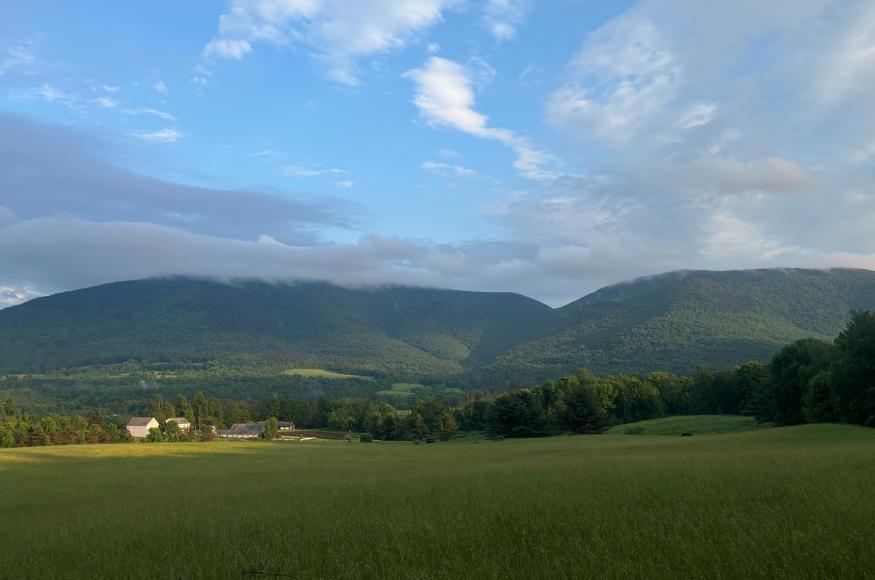
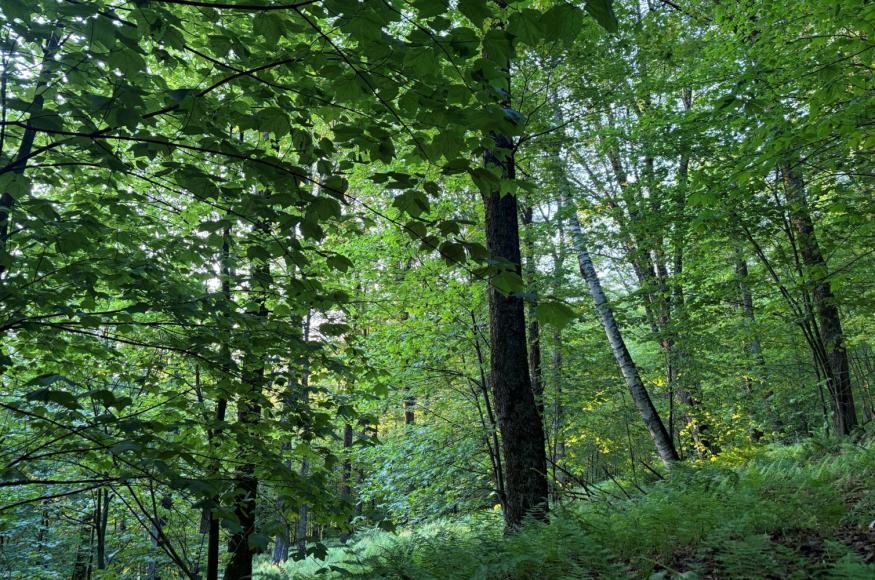
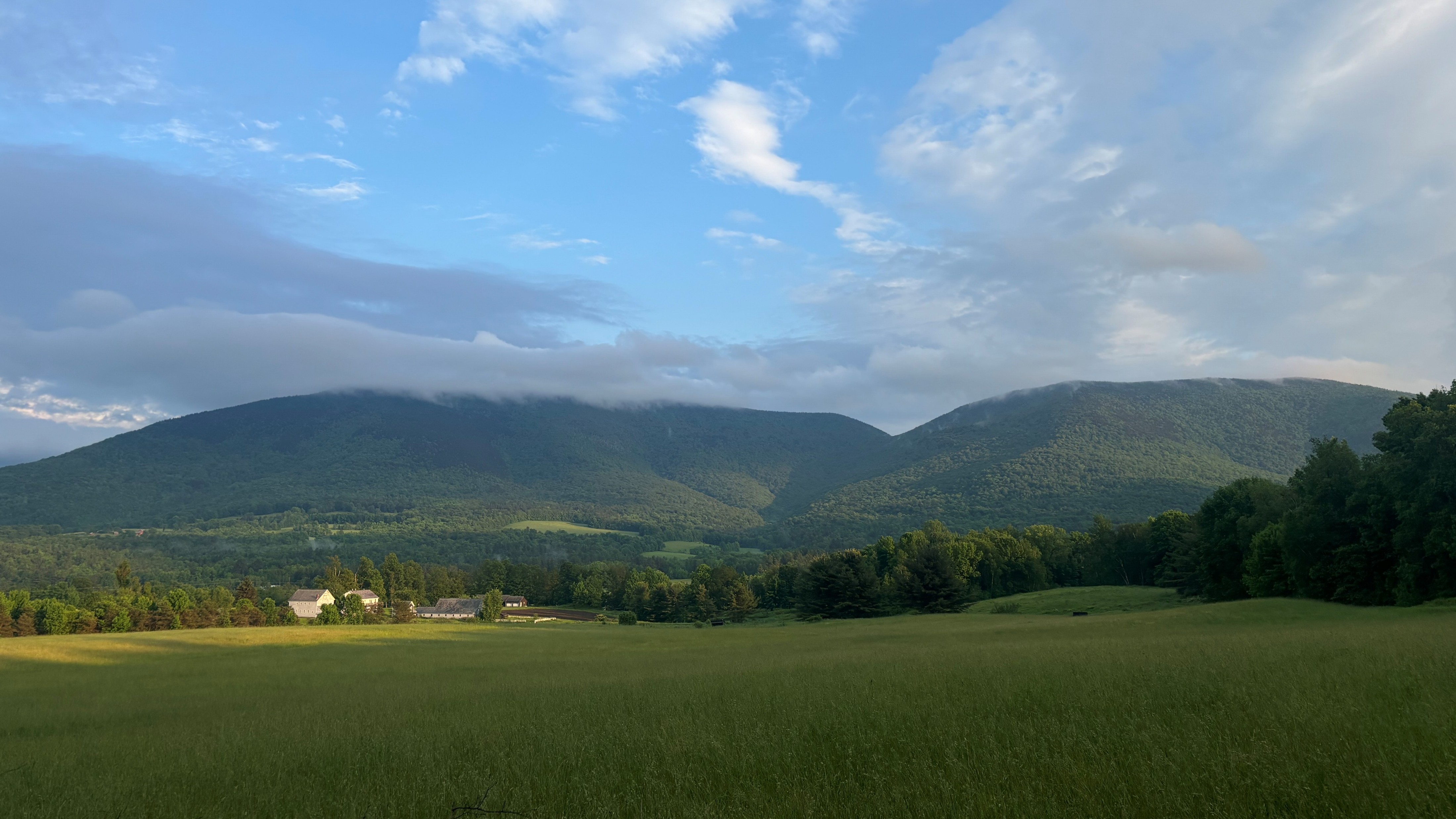
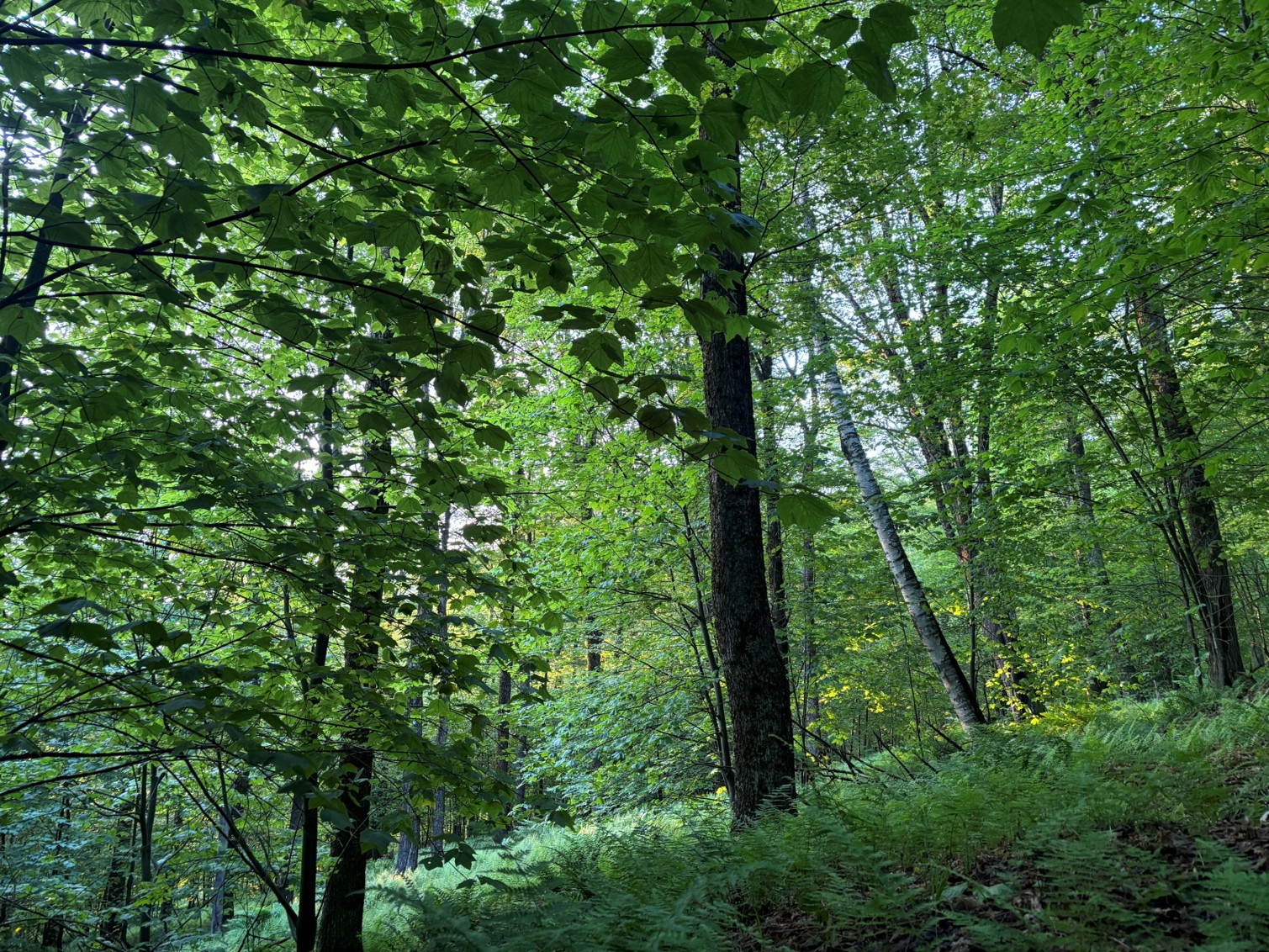
Smokey House Center is a 4887-acre property in the town of Danby, VT, within the watershed of the Otter Creek headwaters. The property’s altitude ranges from 1,214 to 3,769 feet above sea level; 1,226 acres are over the 2,500-foot mark. The NIACS project area includes two active sugarbushes: SB-2, a low-elevation Northern hardwood forest dominated by sugar maple and black cherry, and SB-3, a mid-elevation Northern hardwood forest on the flank of Dorset Peak, dominated by sugar maple with lesser proportions of climate-sensitive species (i.e., yellow birch, striped maple, American beech). Soils are locally rich and support a robust community of spring ephemerals and other calcareous-associated plant species. Notable Audubon priority bird species for sugarbush include mourning warbler, black-throated blue warbler, and hermit thrush in the upper portion of SB-3, and wood thrush in SB-2.
Since 1958, when the land was purchased by Stephen and Audrey Currier, it has been stewarded by the Taconic Foundation, and then by the autonomous Smokey House Center since the 1990s, with the goal of conserving the land and the rural character of the region. Historically, the goals of Smokey House Center were to protect the land from subdivision and development, to promote and support rural livelihoods such as farming and timber production at a sustainable scale, and to provide a place for young people to learn and grow outdoors. The property is a mix of farmland and forestland, and 4,695 acres of both farmland and forestland are under conservation easements with the New England Forestry Foundation (NEFF Easement). Smokey House Center also has ongoing youth education programs and is used by the wider Danby community for recreation, and particularly for hunting.
Since 1958, when the land was purchased by Stephen and Audrey Currier, it has been stewarded by the Taconic Foundation, and then by the autonomous Smokey House Center since the 1990s, with the goal of conserving the land and the rural character of the region. Historically, the goals of Smokey House Center were to protect the land from subdivision and development, to promote and support rural livelihoods such as farming and timber production at a sustainable scale, and to provide a place for young people to learn and grow outdoors. The property is a mix of farmland and forestland, and 4,695 acres of both farmland and forestland are under conservation easements with the New England Forestry Foundation (NEFF Easement). Smokey House Center also has ongoing youth education programs and is used by the wider Danby community for recreation, and particularly for hunting.
Management Goals
The overall goals that managers have for this site are to:
- Improve sugarbush understory habitat for low-nesting forest bird species.
- Increase canopy diversity and promote underrepresented tree species.
Within these goals, the specific objectives include:
- Increase understory cover of vegetation <6' tall across both SB-2 and SB-3 sugarbushes to >25% to improve the quality of nesting habitat for low-nesting species (e.g., wood thrush, black-throated blue warbler).
- Maintain or increase overstory and midstory tree species diversity, focusing on resilient species (e.g., basswood, black cherry). Both sugarbushes have 28-30% non-sugar-maple tree species, and the minimum for Bird-Friendly Maple is 25%.
- Maintain or increase overstory and midstory tree species diversity, focusing on species with high bird forage value, particularly for scarlet tanager (e.g., black cherry and yellow birch).
Climate Change Impacts
For this project, anticipated climate change impacts likely to have an impact on the project site:
Forest vegetation in in the region may face increased risk of moisture deficit and drought during the growing season.
The growing season is generally expected to increase by 20 days or more by the end of the century, due to fewer days with minimum temperatures below 32°F.
The winter season will be shorter and milder across the region, with less precipitation falling as snow and reduced snow cover and depth.
Habitat will become more suitable in the region for more southern tree species.
Challenges and Opportunities
Climate change will present challenges and opportunities for accomplishing the management objectives of this project, including:
Challenges
Reduced snowpack (allowing further deer browse, as well as more wind/ice scouring that would favor existing fern cover over woody plants) are likely to reduce sapling recruitment into the understory.
More variable growing-season precipitation might negatively affect the vigor of understory saplings and shrubs, especially in the steep-sloped SB-3 sugarbush.
More variability in growing season temperature & precipitation could create stressful conditions in some years for the dominant sugar maple overstory, as well as other climate-sensitive trees (e.g., yellow birch).
Opportunities
Warmer temperatures and a longer growing season could improve overall forest productivity and eventually promote more southerly species to establish in the understory.
Some climate resilient species (e.g., basswood, black cherry) already present in the overstory, albeit at low abundance. Selecting these as crop trees could improve their vigor and promote greater abundance of these species.
Adaptation Actions
Project participants used the Adaptation Workbook to develop several adaptation actions for this project, including:
Area/Topic
Approach
Tactics
Tree recruitment and regeneration
2.2. Prevent the introduction and establishment of invasive plant species and remove existing invasive species.
2.3. Manage herbivory to promote regeneration of desired species.
9.4. Protect future-adapted seedlings and saplings.
2.3. Manage herbivory to promote regeneration of desired species.
9.4. Protect future-adapted seedlings and saplings.
Continue to use selection harvest (i.e., single-tree/small group selection or variable retention thinning) to promote enough regeneration among target tree species (i.e., sugar maple, black cherry, basswood) to escape deer browse in the SB-3 sugarbush.
Control extant invasive populations prior to similar harvest in the SB-2 sugarbush.
Forest composition and structure
2.1. Maintain or improve the ability of forests to resist pests and pathogens.
5.1. Promote diverse age classes.
5.1. Promote diverse age classes.
During selection harvest, choose varied tree species, structures, and levels of senescence to retain.
This includes: Maintaining or reducing the current proportion of sugar maple, promoting species with high potential resilience and high forage value for birds, and retaining current snags and senescing trees (future snags).
The initial harvest occurred in Winter 2025/26, and future light selection harvests will be implemented on a 20-30 year rotation.
Monitoring
The ideal outcome is a mix of currently-present earlier successional species (e.g., white birch, pin cherry), tolerant and moderately climate-vulnerable species (sugar maple, yellow birch), and climate-favored species (basswood, black cherry), with relatively low proportions of beech. If the desired species composition is not met, managers will consider further thinning/gap formation, and repeat surveys on a 5 year interval.
To measure project outcomes, project participants identified several monitoring items that could help inform future management, including:
To measure project outcomes, project participants identified several monitoring items that could help inform future management, including:
Annual long-term bird monitoring at established Audubon point count sites in both sugarbushes to assess responses to management interventions relative to 2025 pre-management baseline.
Percent cover and species of invasive plants at stratified survey locations every 1-2 years (e.g., using established Audubon bird/forest survey points, within a 50m circle of each point); Exact stem counts pre/post treatment.
Bird-Friendly Maple forest inventory plots after 4-5 years in the SB-3 sugarbush (understory % cover), or using 10x50m transects to record woody species < 8cm DBH within and adjacent to harvest area.
Re-inventory of the SB-3 sugarbush following Winter 2025/26 thinning to establish new baseline proportions following Smokey House forest intern protocols used in 2025 field season. (Repeat inventory on a 10y cycle to evaluate recruitment).
Keywords
Wildlife habitat