
Project Area
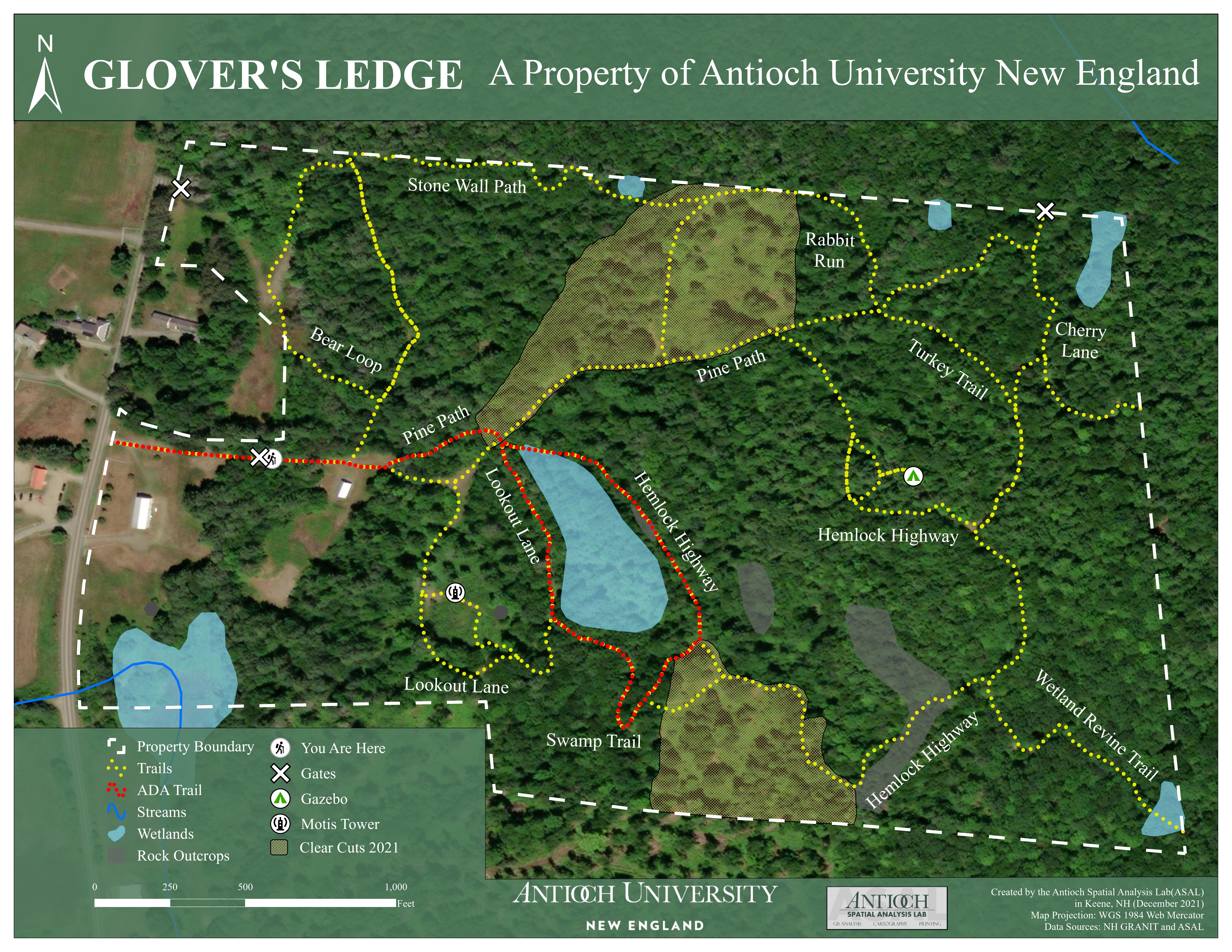
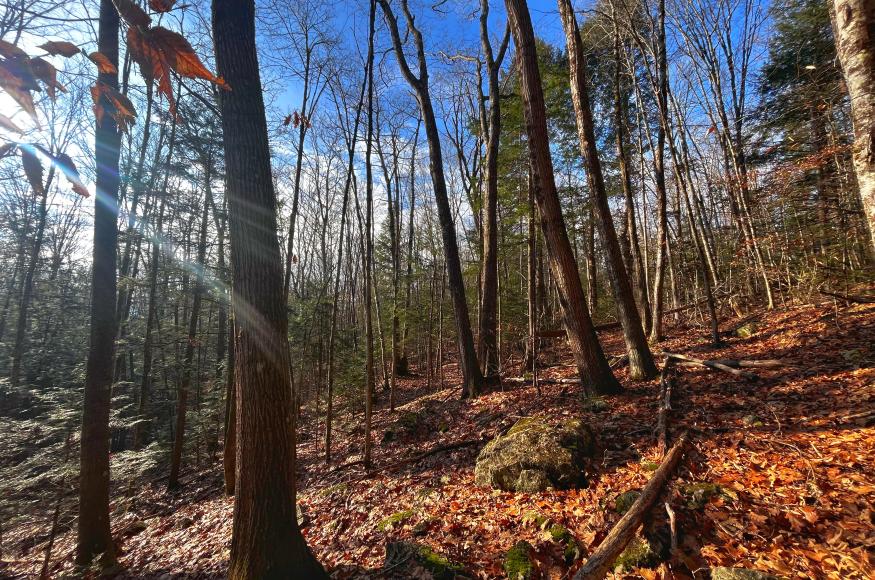
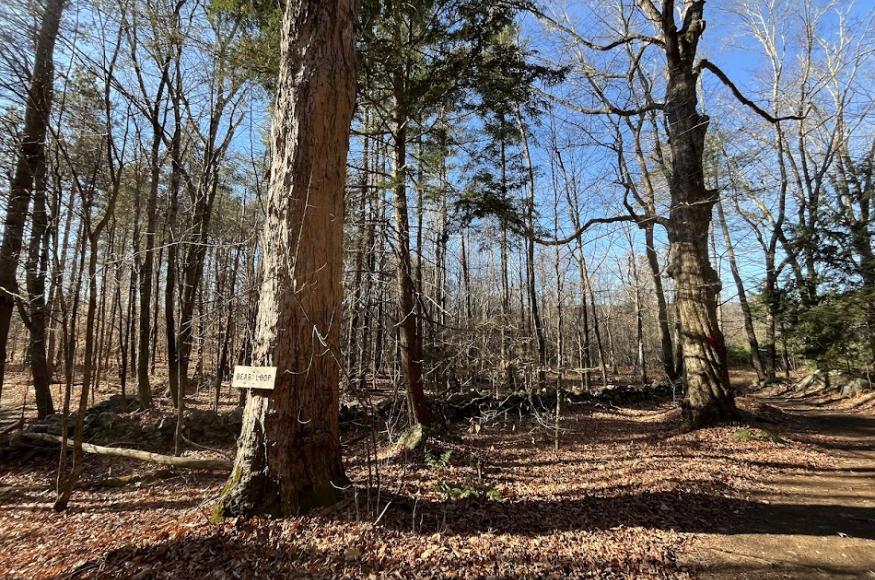
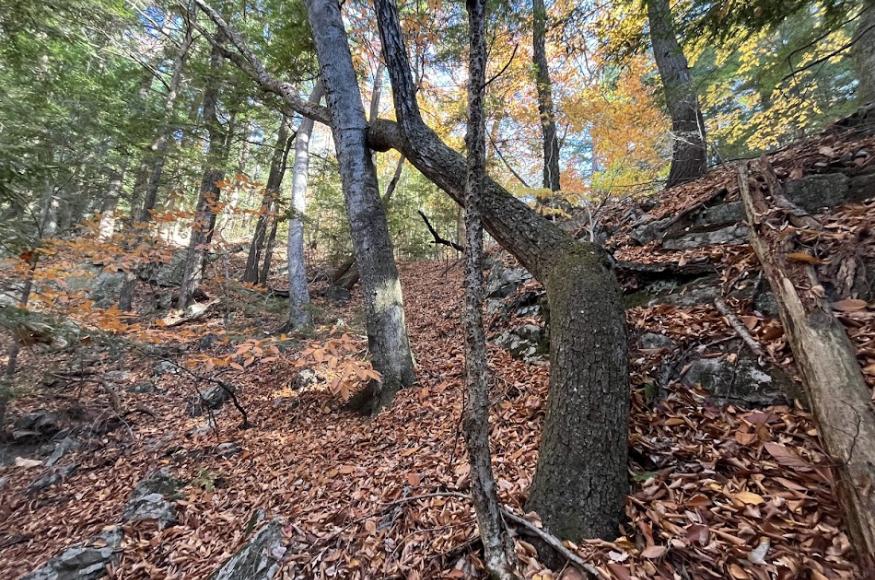
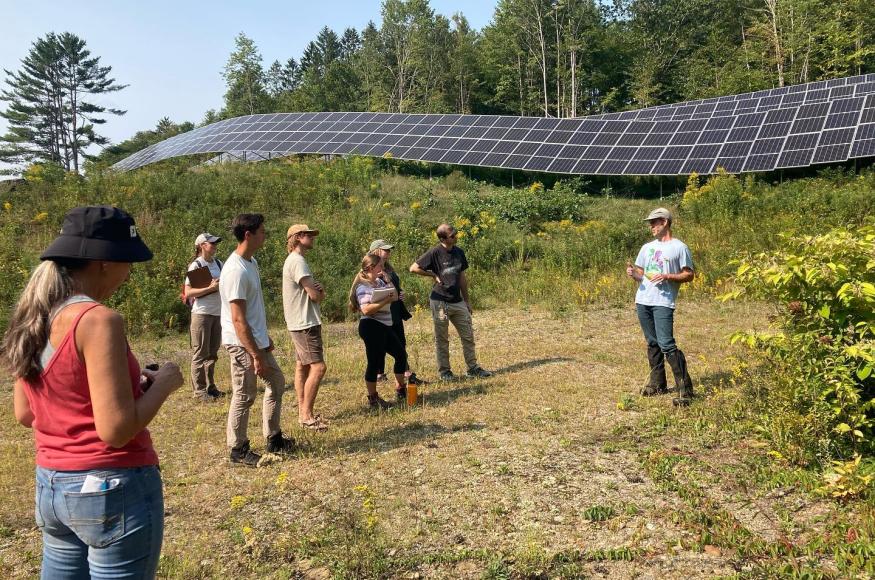
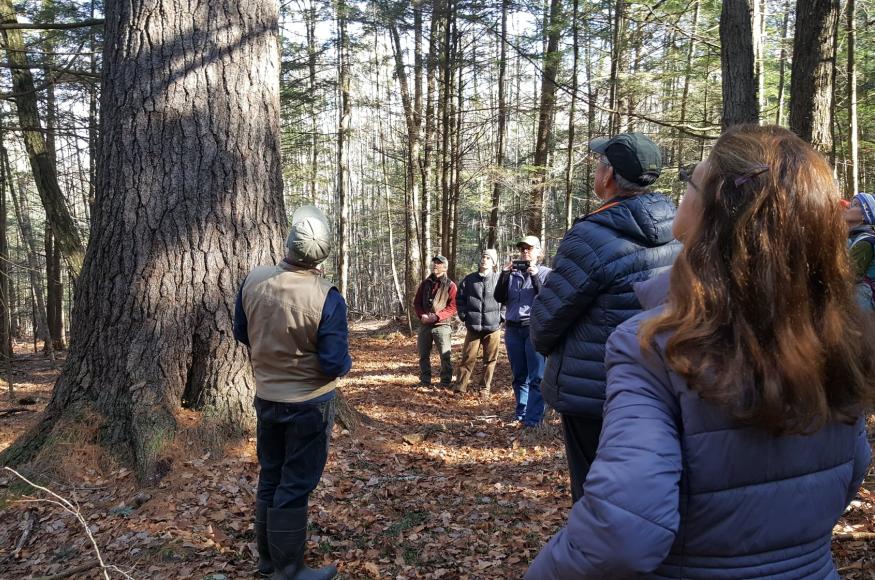
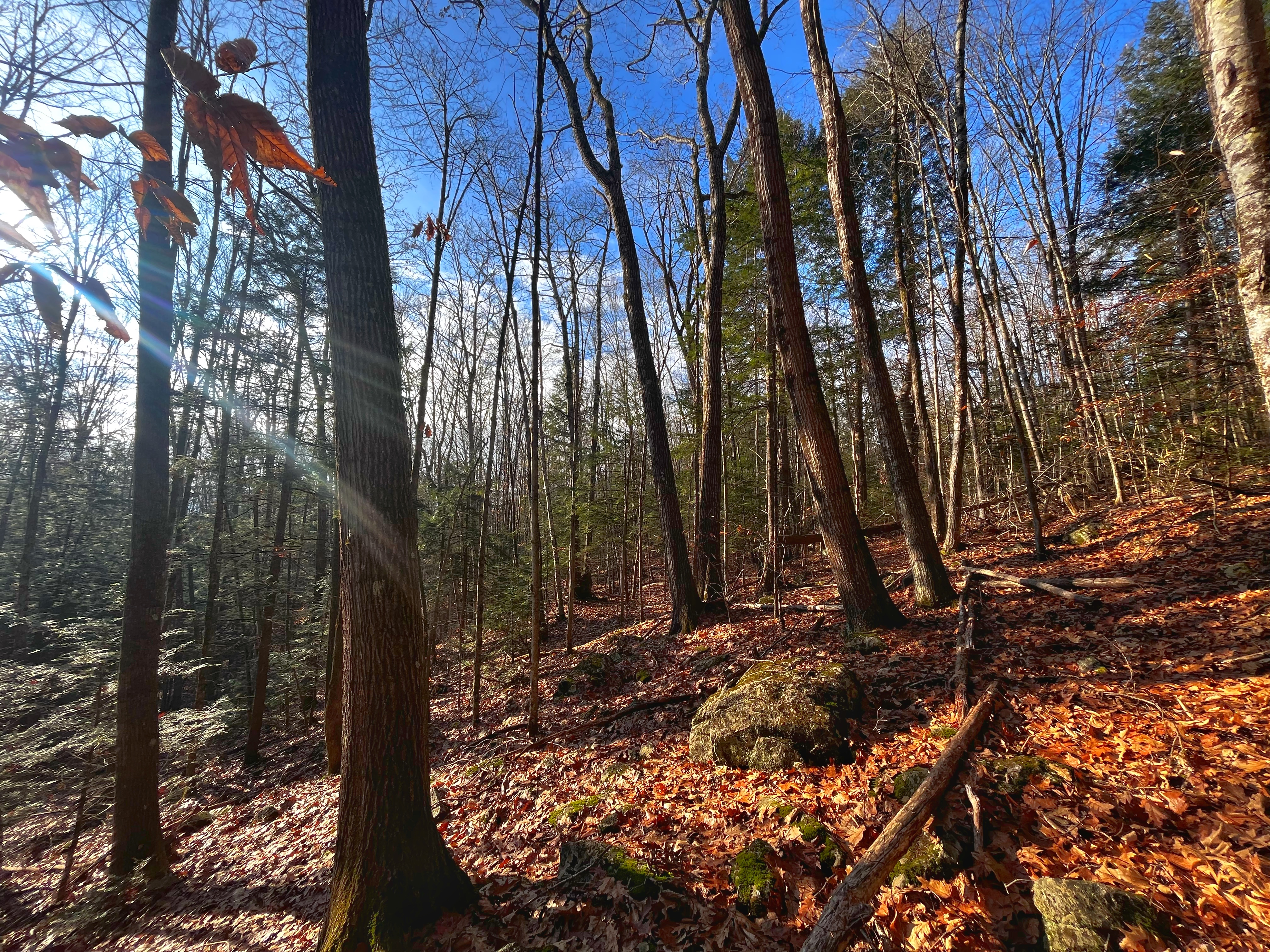
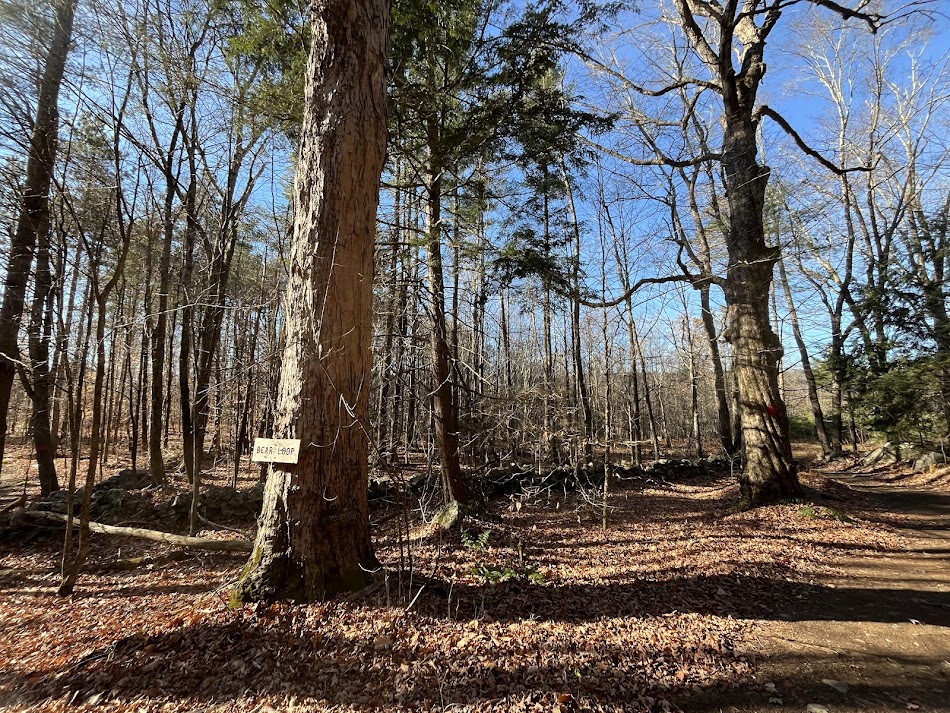
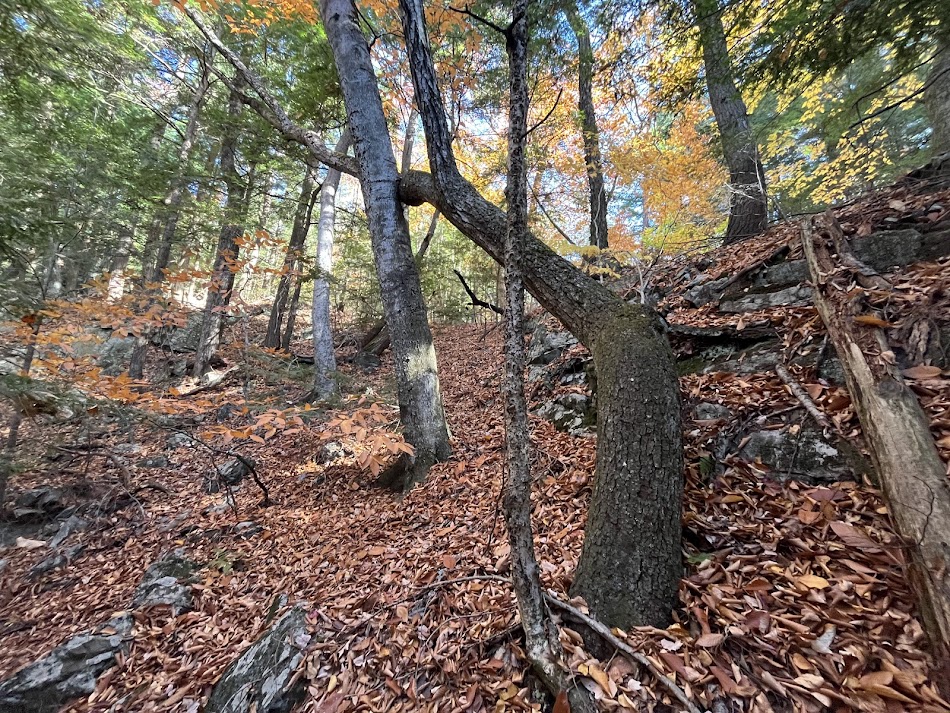
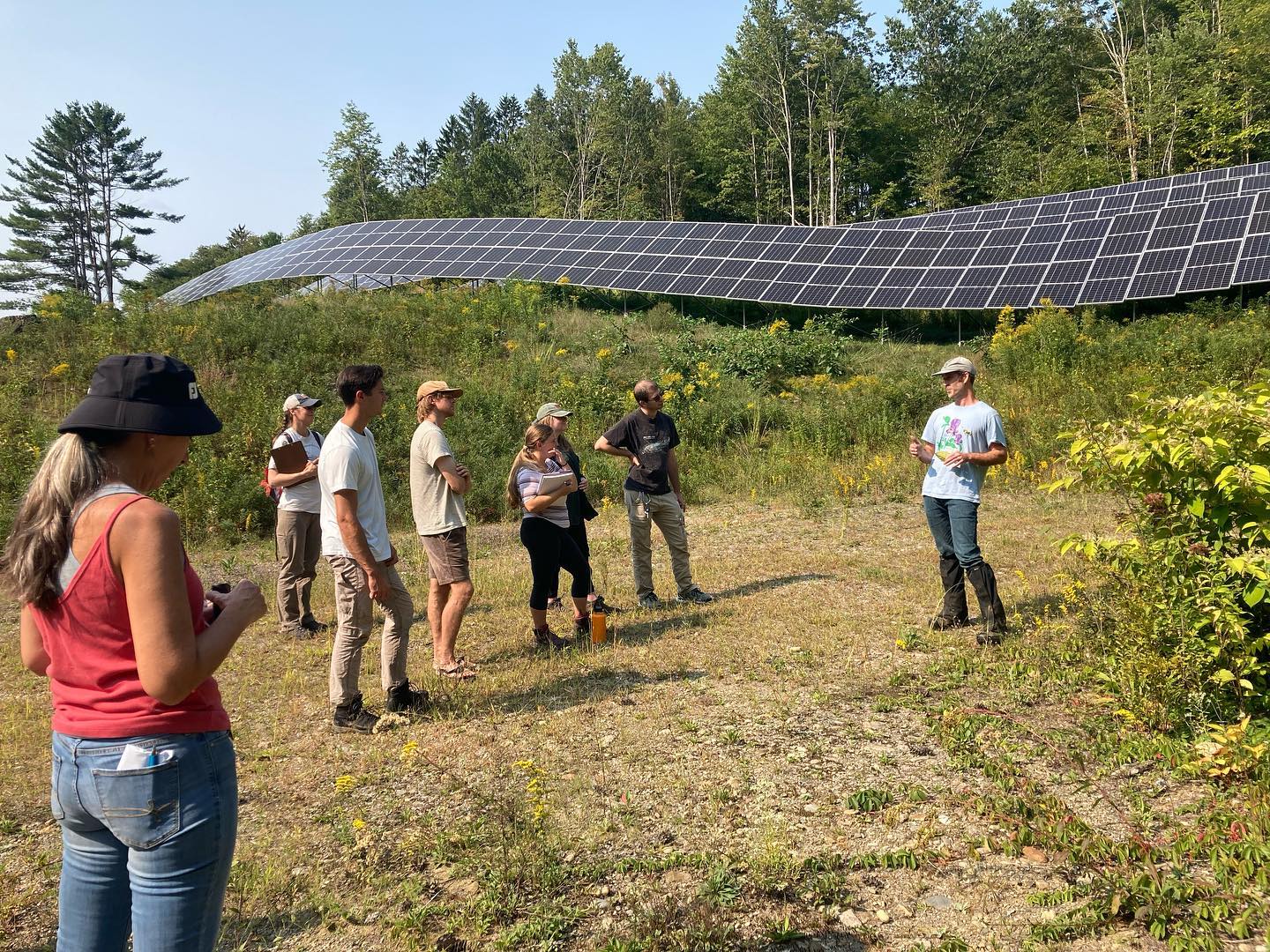
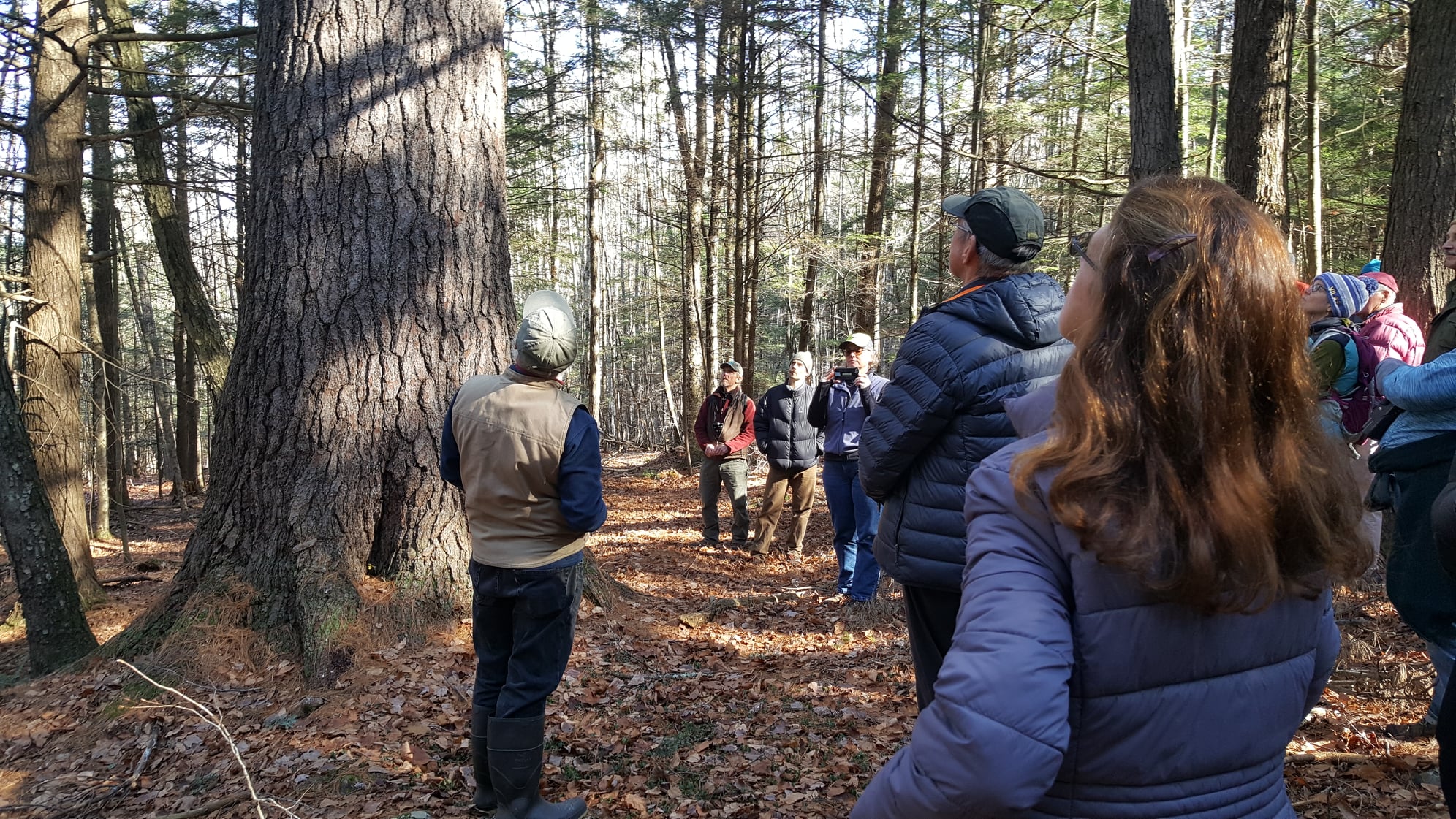
 Glover’s Ledge is an 80 acre forested property owned by Antioch University since 2014 and is located in Langdon, New Hampshire. The property is comprised of transitional hardwoods along with young forest areas, wetlands, rock outcrops, and other natural features. Antioch University New England manages Glover’s Ledge as an outdoor classroom that supports hands on learning, research, recreation, environmental education, community connection, and sustainability. The property offers approximately three miles of walking trails, including a half mile ADA accessible trail, as well as a solar array, a Motus wildlife tracking station, young forest demonstration areas, and an educational barn and pavilion. To guide long term stewardship, Glover’s Ledge is supported by student property managers, ongoing graduate level courses, and a 15 year forest management plan.
Management Goals
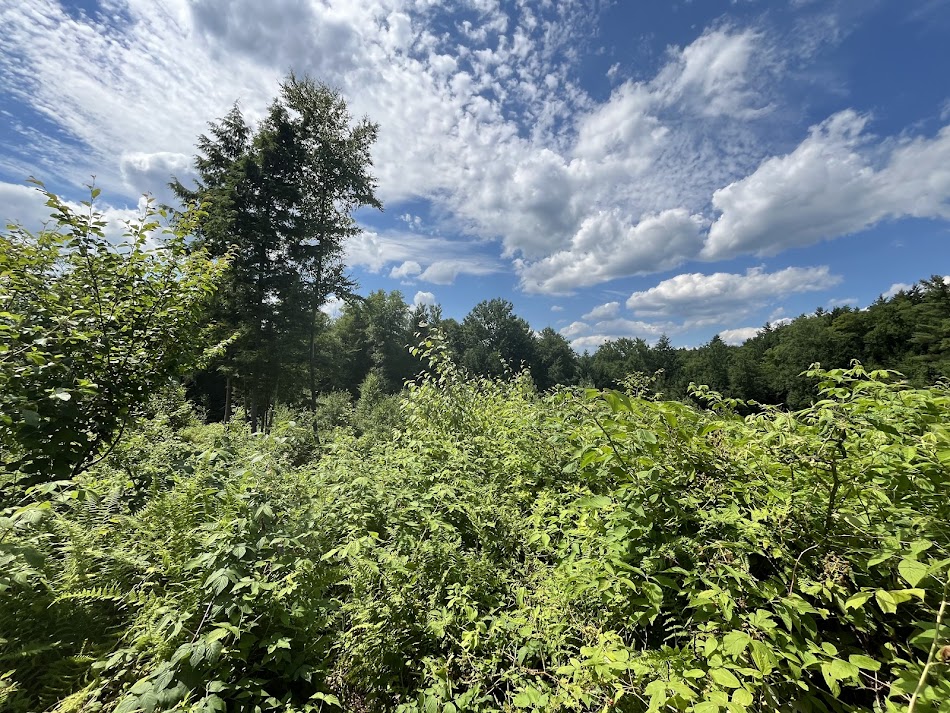
Goal 1: Maintain and enhance the diversity of forest community composition and structure within the Transitional Hardwoods forest type.
Stand 1- Enriched Transitional Forest
- Recruit sawtimber sugar maple, white pine, red oak, and iron wood into larger size classes, while retaining uneven-aged diameter distribution in the next 30 years.
- Identify at least 4 seed trees per acre for mast release to create desirable seedbed composition in the next 5 years.
- Retain red pine as legacy of artificial regeneration by crown thinning to improve vigor in the next 30 years.
Stand 2- Matrix Transitional Forest
- Retain open-and-closed canopy cover in existing matrix.
Stand 3- North-facing Hemlock Transitional Forest
- Maintain continuous canopy cover and retain at least 35% of basal area as conifer component.
Stand 4- South-facing Oak Transitional Forest
- Shift composition to red oak and white pine to at least 40% basal area by removing unsuited species and poor-formed crown stems.
Goal 2: Maintain and improve wildlife habitat for identified Species of Greatest Conservation Need (e.g., Prairie Warbler, Eastern Towhee, Blue-winged Warbler, Scarlet Tanager, Ruffed Grouse, Veery, and American Kestrel) per latest New Hampshire State Wildlife Action Plan.
Stand 1- Enriched Transitional Forest
- Maintain closed-canopy conditions with improved midstory creating vertical stratification in the next 30 years (e.g., for Scarlet Tanager, Wood Thrush)
- Identify at least 4 seed trees per acre for mast release for food crops (e.g., red oak, white pine, and red pine) in the next 5 years.
Stand 2- Matrix Transitional Forest
- Retain a permanent 2.5-acre gap for early succession every 10 years (e.g., for Prairie Warbler, Eastern Towhee, Veery, Blue-winged Warbler)
- Recruit pole-sized stems of desirable composition mixture every 20 years (e.g., for Ruffed Grouse, Veery)
- Retain conifer component in unharvested area especially of midstory strata (e.g., for Wood Thrush)
Stand 3- North-facing Hemlock Transitional Forest
- Retain closed-canopy conditions and conifer component in unharvested area especially of midstory strata (e.g., for Wood Thrush)
- Monitor standing and downed deadwood volumes (e.g., for Ruffed Grouse)
Stand 4- South-facing Oak Transitional Forest
- Establish mixed-canopy cover 40-60% over the next 30 years as positioned near Matrix Transitional Forest (e.g., for Scarlet Tanager, Eastern Towhee)
- Identify at least 4 seed trees per acre for mast release for food crops (e.g., red oak, white pine) in the next 5 years.
Goal 3: Developed long-lived, multi-aged stands with desired regeneration recruited.
Stand 1- Enriched Transitional Forest
- Reduce glossy buckthorn to less than 10% stems per acre of seedling and saplings. Desired regeneration is black birch, bitternut hickory, ironwood, and sugar maple in next 5 years.
- Recruit two piles of fine woody material per acre around desirable advanced regeneration in next 10 years.
Stand 2- Matrix Transitional Forest
- Achieve 30% of regeneration stems in gaps to desired regeneration (natural/artificial) sugar maple, bitternut hickory, or oaks (e.g., scarlet or white) in the next 10 years.
- Achieve at least 40% survival of plantings above browse height in the next 20 years.
Stand 3- North-facing Hemlock Transitional Forest
- Recruit deadwood as regeneration substrate of at least one nurse log (>14-inch diameter and >16 feet long) per acre over the next 20 years.
Stand 4- South-facing Oak Transitional Forest
- Regenerate red oak and white pine (at least 100 seedlings and 50 saplings per acre).
- Recruit at least 15 pole-sized oak stems per acre in the next 20 years.
Climate Change Impacts
Challenges and Opportunities
Challenges
Opportunities
Adaptation Actions
Project participants used the Adaptation Workbook to develop several adaptation actions for this project, including:
2.1. Maintain or improve the ability of forests to resist pests and pathogens.
3.3. Alter forest structure to reduce severity or extent of wind and ice damage.
5.1. Promote diverse age classes.
5.2. Maintain and restore diversity of native species.
6.1. Manage habitats over a range of sites and conditions.
2.3. Manage herbivory to promote regeneration of desired species.
6.1. Manage habitats over a range of sites and conditions.
3.1: Maintain or restore forest and riparian areas
9.3. Guide changes in species composition at early stages of stand development.
9.4. Protect future-adapted seedlings and saplings.
9.7. Introduce species that are expected to be adapted to future conditions.
4.1. Prioritize and maintain unique sites.
5.4. Establish reserves to maintain ecosystem diversity.
6.1. Manage habitats over a range of sites and conditions.
5.2. Maintain and restore diversity of native species.
6.1. Manage habitats over a range of sites and conditions.
9.1. Favor or restore native species that are expected to be adapted to future conditions.
9.2. Establish or encourage new mixes of native species.
9.3. Guide changes in species composition at early stages of stand development.
9.4. Protect future-adapted seedlings and saplings.
9.7. Introduce species that are expected to be adapted to future conditions.